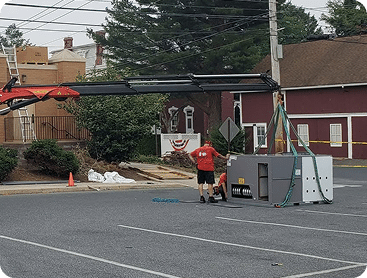
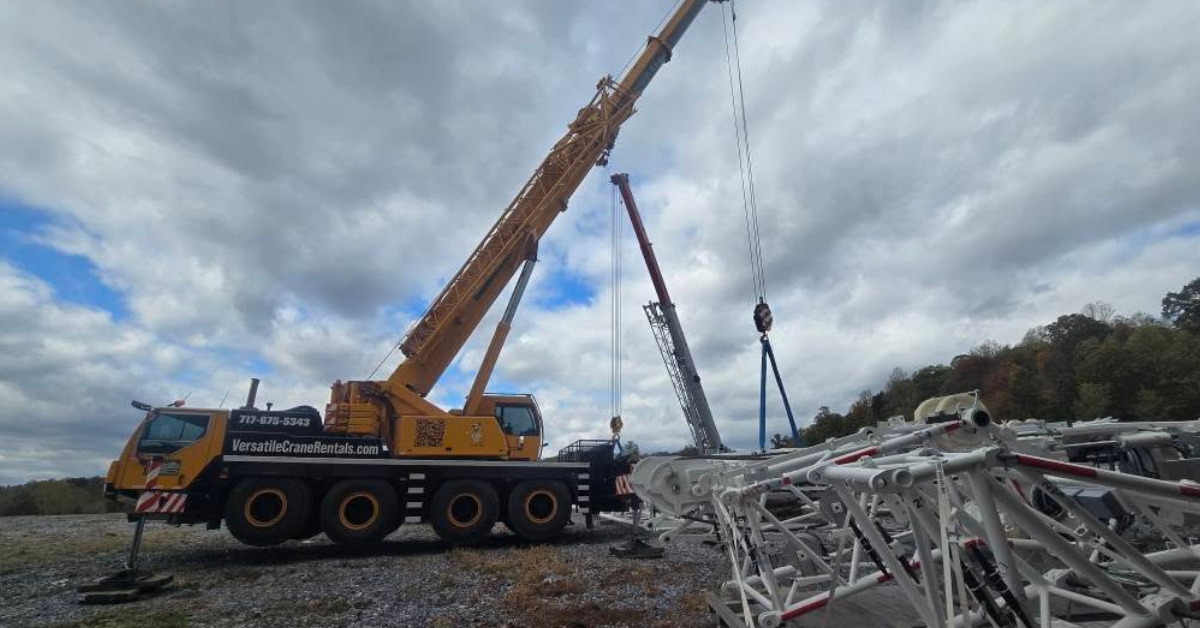
A tower crew can climb, rig, and connect equipment all day, but getting a tower section, an antenna array, or a 6,000-pound battery cabinet up to height in the first place still comes down to having the right crane on-site. Versatile Crane Rentals provides crane support for cell tower and telecom projects across Lancaster County, PA, working alongside tower crews, telecom contractors, and carriers on new construction, equipment upgrades, and storm-damage repair. We size the crane to the tower type and the site, not a default machine, and we run 24/7 for outages and storm damage where a down tower means down service.
Planning a tower build, a 5G equipment upgrade, or storm repair? Call (717) 875-5343 before you lock in a schedule. Confirming crane access to a rural or hard-to-reach tower site early avoids a canceled mobilization later.
What Is Cell Tower Crane Service?
Cell tower crane service is crane support for lifting tower sections, antennas, dishes, and equipment shelters into position on a communications tower, working alongside the tower crew who handles climbing, rigging, and RF connections. The crane does the heavy lifting; the tower crew does the work at height.
When Do You Need a Crane for Cell Tower Work
You need a crane when a tower section, antenna array, equipment shelter, or battery cabinet is too heavy or too high to move into position by hand or hoist alone, which covers most new tower construction, equipment upgrades like 5G retrofits, and any storm-damaged component that needs to come down or go back up.
How Long Does a Cell Tower Lift Take
A single equipment swap, like replacing an antenna panel or a dish, often runs a few hours once the crane is set. Full tower section stacking during new construction runs longer and typically happens over multiple lifts as the tower goes up piece by piece.
What We Lift on Cell Tower and Telecom Jobs
- Tower sections during new construction or replacement
- Antenna panels, dishes, and microwave equipment
- Equipment shelters and battery cabinets, some of which run several thousand pounds
- Ice bridges and mounting structural steel
- Storm-damaged tower components needing removal or replacement
Why Tower Type Changes the Lift
Not every cell tower is built the same way, and the type drives what the crane job actually looks like.
Monopole towers, single steel poles common in cities and suburbs, need a crane for nearly every section during construction since there’s no way to climb-and-build them from the ground up.
Lattice towers, the three or four-legged self-supporting structures built from many steel members, carry heavier loads and more equipment, and lifts often involve more individual pieces spread across a longer build.
Guyed towers, tall and thin structures held up by cable lines, are common on rural sites with more available land, where crane access itself, not the tower design, is usually the bigger planning question.
Knowing which type you’re working with before the crane shows up changes the rigging plan, the crane size, and how many separate lifts the job actually needs.
Why Cell Tower Lifts Take More Planning
Height alone doesn’t make a cell tower lift complicated. Coordination does. The crane has to work around an active tower crew, RF equipment that can’t be damaged, and often a live site that’s still carrying signal for nearby customers. Site access adds another layer: rural guyed-tower sites can mean a long, unpaved approach that limits what crane can even reach the pad, while urban monopole and stealth sites often mean tight lots with little room for outrigger spread. We walk the access and the tower type before quoting, since either one can change what crane the job actually needs.
How a Cell Tower Crane Lift Works
- Site and access review: We confirm the tower type, site access, and any RF or electrical hazards the tower crew flags before the crane arrives.
- Rigging plan: We confirm the weight and dimensions of the section, antenna, or equipment being lifted and plan rigging accordingly.
- Coordination with your tower crew: We schedule around the climbers’ and technicians’ sequence, since the crane’s job is to support their work, not run ahead of it.
- The lift: Our operator sets each piece, working with the ground crew and tower crew’s signals until it’s placed or removed.
- Site cleared: Crane and rigging leave once the lift sequence for that visit is complete.
Working Alongside Your Tower Crew
We provide the crane. We don’t climb the tower, connect RF equipment, or perform electrical work, and we’re not the right call for a job that’s only climbing and connection work with nothing to lift. What we do is show up sized correctly for your tower type and site, and run the schedule around your crew’s sequence instead of making them work around ours.
Cell Tower Crane Safety and Certification
Communication tower work carries some of the highest incident rates in construction, which is why OSHA maintains a dedicated Communication Towers resource page separate from general crane guidance. Tower crews typically follow standards and training from the National Association of Tower Erectors (NATE), which partners directly with OSHA on tower-industry safety. On our end, crane operator certification runs through accredited bodies like the NCCCO. If your project requires documentation from us before mobilization, ask and we’ll provide it.
What Drives the Cost
- Tower type: monopole, lattice, and guyed towers each call for different rigging and, often, different crane sizes.
- Number of lifts: a single antenna swap costs less than stacking multiple tower sections across a build.
- Site access: rural sites with limited road access can require more setup time than an urban lot with a paved approach.
- Coordination complexity: working around an active tower crew and live RF equipment adds planning time even on a straightforward lift.
- Timing: storm-related emergency calls typically cost more than standard-notice scheduling.
Areas We Serve for Cell Tower Crane Services
We provide cell tower and telecom crane support throughout Lancaster County, including Lancaster, Columbia, Lititz, Ephrata, Elizabethtown, New Holland, Harrisburg, Hershey, Lebanon, York, and Reading, with coverage extending to Carlisle, Coatesville, Downingtown, Hanover, Kennett Square, Middletown, Oxford, Palmyra, Parkesburg, Phoenixville, Pottstown, West Chester, and Wilmington. Tower sites range from urban monopoles and stealth installations to guyed towers on rural farmland, and access varies accordingly. Check our full service area for exact coverage, or call and we’ll confirm crane access to your specific site.